¶ Overview
- In 2024 Begich committed to letting his fishing policy be decided by the Stop Alaskan Trawler Bycatch Group that was focused on the destructive commercial fishing practice known as trawling and finding a solution to bycatch. Since 2022, Begich has taken $4,500 from trawling interests and in 2025 5,000 Alaskans signed a reminding Begich of his promise and urging him to ban bottom trawling. He has yet to do so.
¶ When Running For Congress, Begich Promised To Stand Up To Trawling And Has Yet To Deliver
¶ Begich promised He would support Fishing policy that the “Stop alaskan trawler bycatch” facebook group recommended
2024: When Running For Congress, Begich Promised To Put Alaska’s “Fishing Families First” And Give Them “Direct Representation” In Congress. According to Nick Begich’s Facebook, “FISHING FAMILIES FIRST: A member of Congress must represent the people, not special interests and their armies of DC lobbyists. I'm doing something that has never been done for Alaska's fishing families: DIRECT representation. After hearing from constituents, seeing the wanton waste of by-catch, learning about the tremendous damage caused by the Seattle-based trawl fleet, and understanding the scope of financial interests at play, it's clear that Alaska's fish policy in Congress MUST come DIRECTLY from the people. That is why today, I am asking the 40,000 members of the STOP Alaskan Trawler Bycatch group to construct my congressional fish policy.” [Facebook, Nick Begich, 6/19/24]
- Begich Publicly Committed “To Support The Policy That The STOP Alaskan Trawler Bycatch Team Recommends And To Hit The Ground Running Once Elected.” According to Nick Begich’s Facebook, “I am committing today publicly to support the policy that the STOP Alaskan Trawler Bycatch team recommends and to hit the ground running once elected. If you are not a member of this group and would like to weigh in, I'd advise you to join and get involved in the discussion. I understand clearly that outside interests will be alarmed at this decision and will likely do all they can to stop my effort to represent the people of Alaska, but as has been true from day one, I am not interested in representing them, I am interested in representing YOU.” [Facebook, Nick Begich, 6/19/24]
- The Stop Alaskan Trawler Bycatch Group’s Facebook Page Was “About Alaskan Trawlers And The Damage They Do” And How The Group Can “Find A Common Answer To Try To SAVE OUR WATER.” According to STOP Alaskan Trawler Bycatch’s Facebook page, “This page is about Alaskan Trawlers and the damage they do. We are hear to learn and find a common answer to try to SAVE OUR WATERS.”
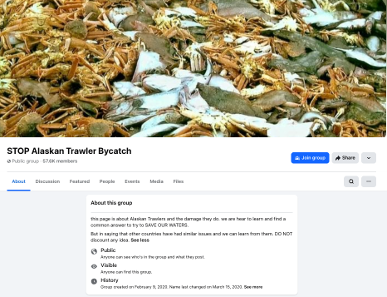
[Facebook, STOP Alaskan Trawler Bycatch, Viewed 5/29/26]
Trawling Is A Fishing Practice That InvolvedDragging Weighted Nets Across The Seafloor To Catch Fish. According to Salmon State, “Trawling is one of the most destructive forms of fishing in the world. Trawlers drag massive, weighted nets across the seafloor — flattening coral gardens, crushing crabs, releasing carbon dioxide, and destroying habitats essential to the survival of fish species we depend on. Across Alaska, trawling results in immense waste, as millions of pounds of non-target species like halibut, crab, and salmon are discarded dead. These are the very species that sustain Alaska's subsistence, small boat directed commercial, and sport fisheries. Over the last three years, trawlers have bycaught roughly 4.3 million pounds of halibut annually.” [Salmon State, Viewed 5/29/26]
- The Term “Trawler” Refers To A Rugged And Sturdy Boat Designed For Commercial Fishing And The Specific Practice Of Trawling. According to North Pacific Yachts, "The name ‘trawler’ evokes images of sturdy vessels built for enduring long distances across the open sea with ease and stability. Today, trawler yachts are renowned as reliable boats for long-distance cruising, coastal explorations, and liveaboard lifestyles. But why is it called a trawler? The term originates from the fishing industry, where trawler boats were designed to pull heavy nets through the water for catching fish. Over time, however, the name evolved beyond commercial fishing vessels to represent recreational yachts built with a similar focus on stability, efficiency, and endurance. Tracing the Name: From Fishing Trawlers to Our Yachts. The Original Trawlers: A Rich Fishing Heritage. The term ‘trawler’ has roots that trace back to the 19th century, originating from the fishing industry. Traditional trawlers were rugged, seaworthy vessels designed for commercial fishing. Known for their unique hull shape, deep draft, and sturdy build, they were purpose-built to handle long journeys in rough waters. The name ‘trawler’ itself is derived from the fishing method of ‘trawling,’ where large nets are dragged behind the vessel to catch fish. The design of these boats allowed them to travel at a slow, steady pace, an essential feature for effective trawling." [North Pacific Yachts, Why Is It Called A Trawler, 11/13/24]
- Bycatch Refers To Marine Life That Is Unintentionally Caught By Commercial Fishing Gear. According to the International Fund For Animal Welfare, "Bycatch is a term often used in marine conservation that refers to the marine life unintentionally captured by or entangled in commercial fishing equipment, including gill nets, shrimp trawls, and longline gear. They are not the intended target but are accidentally caught by these indiscriminate fishing practices. Bycatch affects a range of aquatic wildlife, including seals, dolphins, whales, sharks, sea turtles, seabirds, and vulnerable fish populations. Animals caught in bycatch are often severely injured and can die as a direct result of their wounds. When marine animals are dragged to the surface by commercial fishing gear, the rapid change in water pressure can cause their internal organs to rupture. If they are taken out of the water, they can die on the boat deck from lack of oxygen. Conversely, if they’re trapped underwater in fishing nets for too long, they risk dying from exhaustion or starvation. As they fight to free themselves, the equipment can damage and pierce through their skin, causing injuries and even mutilations. Fishermen often throw bycatch back into the sea, but the stress and exhaustion these animals experience following this traumatic experience can have a devastating impact on their chances of survival in the face of predators and disease. It’s also highly likely that they will die from any severe injuries." [International Fund For Animal Welfare, 7/24/24]
- Animals Unintentionally Caught By Trawlers “Are Often Severely Injured And Can Die As A Direct Result Of Their Wounds” From Being Caught And Dragged To The Surface. According to the International Fund For Animal Welfare, "Bycatch is a term often used in marine conservation that refers to the marine life unintentionally captured by or entangled in commercial fishing equipment, including gill nets, shrimp trawls, and longline gear. They are not the intended target but are accidentally caught by these indiscriminate fishing practices. Bycatch affects a range of aquatic wildlife, including seals, dolphins, whales, sharks, sea turtles, seabirds, and vulnerable fish populations. Animals caught in bycatch are often severely injured and can die as a direct result of their wounds. When marine animals are dragged to the surface by commercial fishing gear, the rapid change in water pressure can cause their internal organs to rupture. If they are taken out of the water, they can die on the boat deck from lack of oxygen. Conversely, if they’re trapped underwater in fishing nets for too long, they risk dying from exhaustion or starvation. As they fight to free themselves, the equipment can damage and pierce through their skin, causing injuries and even mutilations. Fishermen often throw bycatch back into the sea, but the stress and exhaustion these animals experience following this traumatic experience can have a devastating impact on their chances of survival in the face of predators and disease. It’s also highly likely that they will die from any severe injuries." [International Fund For Animal Welfare, 7/24/24]
¶ March 2025: Nearly Three-Fourths Of Alaska Voters Supported Banning Trawling In The Waters Off The Coast Of Alaska At The Federal Level
March 2025: 74% Of Alaska Voters Think “The Federal Government Should Ban Trawling In Waters Off The Coast Of Alaska.” According to Data For Progress, "So it’s no surprise that new Data for Progress polling finds such bipartisan consensus across a range of Alaska’s priorities, from rural subsistence to insurance coverage of contraception. For the legislature’s top priority, education funding, Data for Progress finds Alaska voters, especially parents, support the majority caucus’s push for a broad increase in per-student funding. As legislators confront a state budget deficit, Alaska voters are united across party and across geography behind oil taxes proposed by the majority caucus. And after heavy use of his veto pen last year, including vetoing bills to increase education funding and to require insurance to cover 12-month contraceptive prescriptions, Governor Mike Dunleavy is viewed increasingly unfavorably, especially by parents. This new polling extends Data for Progress’ research from last session, which surveyed Alaska’s 2024 legislative priorities and election, and accurately anticipated Donald Trump and Nick Begich’s 2024 winning margins each within 2 points. […] The poll also finds wide support for banning trawling: Almost 3 in 4 Alaska voters (74%) think the federal government should ban trawling in waters off the coast of Alaska. This level of support is even higher than when Data for Progress asked the same question last year and 67% of Alaska voters supported banning trawling." [Data For Progress, 3/13/25]
¶ Begich Promised Not To Take Money From The Trawl Fleet But He Had PREVIOUSLY Accepted $4,500 From Trawl Interests In His 2022 Campaign
¶ 2024: Begich Pledged To Not Take Money From The Trawl Fleet
2024: Begich Said To Avoid Even The Appearance Of A Conflict Of Interest “I Will Not Accept Funds From The Trawl Fleet.” According to Nick Begich’s Facebook, “As I have already stated publicly: 1. To avoid even the appearance of conflict, I will not accept funds from the trawl fleet, and if such funds are inadvertently accepted, notify us and they will be promptly returned. 2. We must end any practice that leads to the destruction of our seabed ecosystem. 3. Our long term goal must be to eliminate bycatch.” [Facebook, Nick Begich, 6/19/24]
¶ August 2022: Begich Accepted $1,500 From A PAC That Represented Trawl Vessels
August 5, 2022: Begich’s Campaign Committee Accepted $1,500 From Groundfish Forum PAC.

[Federal Election Committee, Alaskans for Nick Begich, Recipets, Viewed 6/8/26]
- Groundfish Forum Was “A Fishery Trade Association Representing Five Member Companies Operating 19 Trawl Vessels.” According to Groundfish Forum’s Website, “Groundfish Forum is a fishery trade association representing five member companies operating 19 trawl vessels that catch and process a variety of Alaskan groundfish species in the federally managed Amendment 80 (A80) fisheries off the coast of Alaska. Our vessels are the largest producers of flatfish and rockfish in the United States, sustainably producing hundreds of millions of meals for consumers across the globe.” [Groundfish Forum, Viewed 5/14/26]
- 2024: Groundfish Forum Was Involved In Congressional Politics And Signed Onto A Letter Calling For Former Alaska Congresswoman Mary Peltola To Withdraw H.R. 8507. According to a letter sent to Mary Peltola, “Dear Congresswoman Peltola: We write to express our deep concern regarding H.R. 8507—legislation you have introduced that would create sweeping new federal 90 mandates constraining the effective management of our nation’s fisheries. If enacted, H.R. 8507 would directly harm fishermen and coastal communities in Alaska and throughout our nation, along with countless other people who rely on a healthy domestic seafood sector for food, jobs, and their way of life. We ask you to withdraw this legislation.” The letter was signed by “Chris Woodley, Executive Director, Groundfish Forum.” [Letter to Mary Peltola, 6/20/24]
- H.R. 8507, The Bottom Trawl Clarity Act, Would “Mandate US Fisheries Management Councils To More Clearly Define Whether Trawling Has Substantial Or Limited Contact With The Seafloor, And Create A List Of Gear Types That Fall Into The Substantial Category.” According to IntraFish, "A coalition of 53 seafood industry organizations and companies on Thursday called on US Congresswoman Mary Peltola to immediately withdraw a bill she introduced last month that could limit the use of trawling in fisheries across the United States. If passed, HR 8507, the Bottom Trawl Clarity Act, would mandate US fisheries management councils to more clearly define whether trawling has ‘substantial’ or ‘limited’ contact with the seafloor, and create a list of gear types that fall into the ‘substantial’ category. In a letter to Peltola, representatives from trawl fisheries stretching from Alaska's groundfish fisheries to Gulf of Mexico shrimp and New England scallop fisheries, said the bill would have a devasting impact on fishery-dependent communities, especially in socio-economically disadvantaged regions." [IntraFish, 6/20/24]
¶ July 2022: Begich Accepted $1,000 From Arne Fuglvog, Who Worked In Government Affairs For A Company That Operated Trawlers
July 2022: Begich’s Campaign Committee Accepted $1,000 From Arne Fuglvog Who Listed His Occupation As “Government Affairs” At “Glacier Fish Co.”

[Federal Election Committee, Alaskans for Nick Begich, Pre-Primary Report, 7/27/22]
- Glacier Fish Company Operated A Factory Trawler That Was “The Largest Catcher/Processor Vessel In The US Fleet.” According to Glacier Fish Company’s website, “The factory trawler Alaska Ocean was built by the Blount Marine Corporation in Warren, Rhode Island, in 1981. Alaska Ocean was redesigned by Guido Perla and Associates from Seattle in 1989 and rebuilt by Ulstein Hatlo in Norway in 1990 specifically to catch and process Alaska Pollock and Pacific Whiting. In the summer of 2008, Glacier Fish Company purchased the Alaska Ocean and has successfully completed major improvements of the Factory and Fishmeal plants. The Alaska Ocean is the largest catcher/processor vessel in the US fleet with a capacity to catch and process up to 225 metric tons of frozen finished product daily.” [Glacier Fish Company, Viewed 5/15/26]
- Glacier Fish Was Described As “Trawl Company” And Opposed Stricter Regulations On Trawler Fleets In 2024. According to the Alaska Beacon, "Over the next few days, the council faces the latest in a series of painful choices. On one side are tribal leaders from the Yukon and Kuskokwim, who offer gut-wrenching testimony to the council on the cultural losses inflicted on them by the absence of salmon — from empty summer fish camps to barren cupboards that have to be filled with expensive groceries shipped in from the road system. They have pleaded for a crackdown on the largely Seattle-based trawl fleet, whose boats drag wide-mouthed nets through the water that target another species called pollock, but can also accidentally swallow thousands of salmon — what’s known as ‘bycatch.’ On the other side are representatives for the trawlers, who generally support tighter bycatch management but say some of the measures favored by tribes could cost them hundreds of millions of dollars — while giving only a tiny boost to the number of salmon returning to Western Alaska rivers. Trawlers’ monetary losses would also land directly on some Yukon and Kuskokwim Native communities, which, through federal catch-share and nonprofit programs, benefit from profits from the pollock harvest. This complicated fight has been playing out for more than a decade, first in response to declines in king salmon and more recently as chum salmon, a second species, also crashed. But as this week’s council meeting begins, the debate has taken on increasing urgency for participants, as subsistence harvesting bans persist and the responses under consideration by the council threaten to impose steep costs on industry, according to a federal analysis. ‘We’re really concerned about an action that would have a severe economic impact,’ said Glenn Merrill, director of government affairs at a trawl company called Glacier Fish." [Alaska Beacon, 4/6/24]
¶ July 2022: Begich Accepted $1,000 From Todd Loomis, Who Worked For A Group That Opposed Trawling Regulations And Oversight
July 2022: Begich’s Campaign Committee Accepted $1,000 From Todd Loomis Who Listed His Occupation As “Government Affairs” At “Ocean Peace, Inc.”

[Federal Election Commission, Alaskans for Nick Begich, Post-Special Election Report, 7/29/22]
- 2024: Ocean Peace, Inc. Was Involved In Congressional Politics And Signed Onto A Letter Calling For Former Alaska Congresswoman Mary Peltola To Withdraw H.R. 8507. According to a letter sent to Mary Peltola, “Dear Congresswoman Peltola: We write to express our deep concern regarding H.R. 8507—legislation you have introduced that would create sweeping new federal 90 mandates constraining the effective management of our nation’s fisheries. If enacted, H.R. 8507 would directly harm fishermen and coastal communities in Alaska and throughout our nation, along with countless other people who rely on a healthy domestic seafood sector for food, jobs, and their way of life. We ask you to withdraw this legislation.” The letter was signed by “Ruth Christiansen, Director, Government & Industry Affairs, Ocean Peace, Inc.” [Letter to Rep. Mary Peltola, 6/20/24]
- H.R. 8507, The Bottom Trawl Clarity Act, Would “Mandate US Fisheries Management Councils To More Clearly Define Whether Trawling Has Substantial Or Limited Contact With The Seafloor, And Create A List Of Gear Types That Fall Into The Substantial Category.” According to IntraFish, "A coalition of 53 seafood industry organizations and companies on Thursday called on US Congresswoman Mary Peltola to immediately withdraw a bill she introduced last month that could limit the use of trawling in fisheries across the United States. If passed, HR 8507, the Bottom Trawl Clarity Act, would mandate US fisheries management councils to more clearly define whether trawling has ‘substantial’ or ‘limited’ contact with the seafloor, and create a list of gear types that fall into the ‘substantial’ category. In a letter to Peltola, representatives from trawl fisheries stretching from Alaska's groundfish fisheries to Gulf of Mexico shrimp and New England scallop fisheries, said the bill would have a devasting impact on fishery-dependent communities, especially in socio-economically disadvantaged regions." [IntraFish, 6/20/24]
¶ July 2022: Begich Accepted $500 From Kristian Uri, Who Worked As A Fisherman For A Company That Has Operated A Trawler Ship Since 2019
July 2022: Begich’s Campaign Committee Accepted $500 From Kristian Uri Who Listed His Occupation As “Fisherman” At “Fisherman’s Finest Inc.”

[Federal Election Commission, Alaskans for Nick Begich, Post-Special Election Report, 7/29/22]
- Fisherman’s Finest Inc Operated One Trawler Ship That “Joined The Fleet” In February Of 2019. According to Fisherman’s Finest Inc’s website, “America’s Finest is a Skipsteknisk ST-116XL design catcher-processor vessel. It was built in Anacortes, Washington at Dakota Creek Industries (Hull #63). An engineering marvel, with the most up to date fishing/shipping technology, she joined the fleet in February of 2019. Particulars: Class DNV-GL 1A1 E0 Stern Trawler, Hull Ice Class 1B.” [Fisherman’s Finest Inc, Viewed 5/15/26]
¶ October 2022: Begich Accepted $500 From Matt Tinning, Who Worked As A Director For A “Leading Trawl Industry Trade Group”
October 2022: Begich’s Campaign Committee Accepted $500 From Matt Tining Who Listed His Occupation As “Director” At “At-Sea Processors Association.”

[Federal Election Commission, Alaskans for Nick Begich, Pre-General Election Report, 10/12/22]
- At-Sea Processors Association Was Described As One Of “The Two Leading Trawl Industry Trade Groups.” According to KUCB, “A spokesman for Inslee, Mike Faulk, declined to comment, as did representatives from the two leading trawl industry trade groups, the At-Sea Processors Association and United Catcher Boats.” [KUCB, 7/31/24]
- 2024: At-Sea Processors Association Was Involved In Congressional Politics And Signed Onto A Letter Calling For Former Alaska Congresswoman Mary Peltola To Withdraw H.R. 8507. According to a letter sent to Rep. Mary Peltola, “Dear Congresswoman Peltola: We write to express our deep concern regarding H.R. 8507—legislation you have introduced that would create sweeping new federal 90 mandates constraining the effective management of our nation’s fisheries. If enacted, H.R. 8507 would directly harm fishermen and coastal communities in Alaska and throughout our nation, along with countless other people who rely on a healthy domestic seafood sector for food, jobs, and their way of life. We ask you to withdraw this legislation.” The letter was signed by “Stephanie Madsen, Executive Director, At-sea Processors Association.” [Letter to Rep. Mary Peltola, 6/20/24]
- H.R. 8507, The Bottom Trawl Clarity Act, Would “Mandate US Fisheries Management Councils To More Clearly Define Whether Trawling Has Substantial Or Limited Contact With The Seafloor, And Create A List Of Gear Types That Fall Into The Substantial Category.” According to IntraFish, "A coalition of 53 seafood industry organizations and companies on Thursday called on US Congresswoman Mary Peltola to immediately withdraw a bill she introduced last month that could limit the use of trawling in fisheries across the United States. If passed, HR 8507, the Bottom Trawl Clarity Act, would mandate US fisheries management councils to more clearly define whether trawling has ‘substantial’ or ‘limited’ contact with the seafloor, and create a list of gear types that fall into the ‘substantial’ category. In a letter to Peltola, representatives from trawl fisheries stretching from Alaska's groundfish fisheries to Gulf of Mexico shrimp and New England scallop fisheries, said the bill would have a devasting impact on fishery-dependent communities, especially in socio-economically disadvantaged regions." [IntraFish, 6/20/24]
¶ After Getting Elected Begich Introduced A Bill That Would Attempt To “Address Bycatch And Trawling Concerns” But Not Outright Ban Trawling
January 7, 2026: Begich Introduced The Bycatch Reduction And Research Act That Would “Bolster Our Data Collection, Monitoring And Reporting Capabilities, Improve The Use Of Electronic Monitoring Technologies, And Rapidly Advance The Use Of Equipment That Will Reduce Bycatch.” According to a press release from Rep. Nick Begich, "U.S. Senators Dan Sullivan and Lisa Murkowski, and Congressman Nick Begich (all R-Alaska), have introduced the Bycatch Reduction and Research Act. The legislation, which builds on Sen. Sulivan’s landmark Alaska Salmon Research Task Force Act, would improve marine environmental data collection, particularly in the Bering Sea, Aleutian Islands, and Gulf of Alaska; prioritize technology that supports research, bycatch reduction, and protection of marine seafloor habitat; advance, streamline, and enhance electronic monitoring and electronic reporting in United States fisheries; and establish a fund to provide financial assistance for the deployment of gear and technology for reducing bycatch and marine seafloor habitat contact from trawl fishing gear. ‘In recent years, Alaskans have witnessed unprecedented declines among some fish and crab species in parts of the state while, in other parts, runs have been strong and historic,’ said Sen. Sullivan. ‘We need to get to the bottom of all potential causes of this increased variability, including concerns about bycatch and trawl gear habitat impacts, to strengthen the sustainability of our fisheries. My Bycatch Reduction and Research Act will continue to close the research gaps—building on the important work that was started by the Alaska Salmon Research Task Force Act, bolster our data collection, monitoring and reporting capabilities, improve the use of electronic monitoring technologies, and rapidly advance the use of equipment that will reduce bycatch. I urge my colleagues to advance this important legislation aimed at deepening our understanding of the unprecedented variability of our fish and crab stocks and reducing the incidence of bycatch.’ " [Press Release – Rep. Nick Begich, 1/7/26]
- The Bycatch Reduction And Research Act Would Include “Several Measures To Address Bycatch And Trawling Concerns” But It Would Not Ban The Practice Of Trawling Entirely. According to National Fisherman, "The Bycatch Reduction and Research Act includes several measures to address bycatch and trawling concerns. The legislation would reconstitute the Alaska Salmon Research Task Force (ASRTF) – a group established by Congress in 2022 to look at the issue of declining salmon returns – and create the new Bycatch Reduction and Research Task Force. The latter task force would review NOAA research on Alaska salmon, the impact of Alaskan trawl gear on the seafloor, and make recommendations for future research. The bill would also work to improve data collection on Alaska salmon. It would establish a satellite tagging program to track salmon across their life spans and migrations, as well as a genetic sampling grant program to help better identify the stock and age of Alaska salmon caught as bycatch in commercial fisheries. Other provisions in the legislation will foster innovation in bycatch-reducing gear. The bill would provide a flume tank for testing technology and fishing gear to mitigate both bycatch and the impacts of trawling on the seafloor habitat. It would also provide non-federal financial support for commercial fishers to purchase or modify gear and equipment for the same purpose. ‘There is clear and growing concern across Alaska about the impact of bottom trawling on seafloor habitat and the fisheries important to Alaskans,’ Alaska Longline Fishermen's Association executive director Linda Behnken said in a release. ‘Senator Sullivan's bill responds to that concern by providing funding for research and technology to reduce these impacts.’ " [National Fisherman, 1/9/26]
¶ Two Months After The Bycatch Reduction And Research Act Was Introduced, More Than 5,000 Alaskans Demanded A Ban On Bottom Trawling In Federal Waters
March 13, 2025: More Than 5,000 Alaskans Signed A Letter Asking Begich To “Pursue A Ban On Bottom Trawling In Federal Waters Off The State.” According to National Fisherman, "More than 5,000 Alaskans have signed a letter delivered this week to Rep. Nick Begich, R-Alaska, urging the congressman to pursue a ban on bottom trawling in federal waters off the state. Supporters say the effort reflects growing frustrations among coastal residents, small business owners, and fishermen who argue that industrial trawling continues largely unchecked while other fisheries face severe restrictions. Trawling, an industrial method that drags large nets across the seafloor to target species like pollock and other whitefish, has long been controversial in Alaska. Critics argue that the practice results in high levels of bycatch. According to SalmonState, trawl fleets bycatch an average of 141 million pounds of marine life each year. Species caught incidentally include king and chum salmon, halibut, crab, and forage fish such as herring. At the same time, many Alaska fisheries have faced tightening restrictions or closures in recent years due to declining stocks. On the Yukon River, for example, subsistence fishermen have been barred from harvesting king salmon as runs struggle to rebuild. As of Feb. 28, organizers said trawl vessels had recorded roughly 1 million pounds of halibut bycatch in 2026. Some fishermen argue the actual mortality could be higher because halibut sorted from nets and returned to the water are estimated to survive only about half the time. ‘On the campaign trail, Nick Begich told Alaskans that domestic trawling is not sustainable and major reform is needed. In the same interview, Nick stated that immediate action to protect salmon was necessary and that we must reduce bycatch thresholds. Alaskans are still waiting to hear from Nick following through on the stance he took during the campaign,’ said Melissa Norris of Fish Alaska Magazine." [National Fisherman, 3/13/26]
- Alaskans Said “Industrial Trawling Continues Largely Unchecked” While Smaller Fisheries Face Severe Restrictions. According to National Fisherman, "More than 5,000 Alaskans have signed a letter delivered this week to Rep. Nick Begich, R-Alaska, urging the congressman to pursue a ban on bottom trawling in federal waters off the state. Supporters say the effort reflects growing frustrations among coastal residents, small business owners, and fishermen who argue that industrial trawling continues largely unchecked while other fisheries face severe restrictions. Trawling, an industrial method that drags large nets across the seafloor to target species like pollock and other whitefish, has long been controversial in Alaska. Critics argue that the practice results in high levels of bycatch. According to SalmonState, trawl fleets bycatch an average of 141 million pounds of marine life each year. Species caught incidentally include king and chum salmon, halibut, crab, and forage fish such as herring. At the same time, many Alaska fisheries have faced tightening restrictions or closures in recent years due to declining stocks. On the Yukon River, for example, subsistence fishermen have been barred from harvesting king salmon as runs struggle to rebuild. As of Feb. 28, organizers said trawl vessels had recorded roughly 1 million pounds of halibut bycatch in 2026. Some fishermen argue the actual mortality could be higher because halibut sorted from nets and returned to the water are estimated to survive only about half the time. ‘On the campaign trail, Nick Begich told Alaskans that domestic trawling is not sustainable and major reform is needed. In the same interview, Nick stated that immediate action to protect salmon was necessary and that we must reduce bycatch thresholds. Alaskans are still waiting to hear from Nick following through on the stance he took during the campaign,’ said Melissa Norris of Fish Alaska Magazine." [National Fisherman, 3/13/26]
- Melissa Norris Of Fish Alaska Magazine Said She Is Waiting To See Begich “Following Through On The Stance He Took During The Campaign” That “Domestic Trawling Is Not Sustainable And Major Reform Is Needed.” According to National Fisherman, "More than 5,000 Alaskans have signed a letter delivered this week to Rep. Nick Begich, R-Alaska, urging the congressman to pursue a ban on bottom trawling in federal waters off the state. Supporters say the effort reflects growing frustrations among coastal residents, small business owners, and fishermen who argue that industrial trawling continues largely unchecked while other fisheries face severe restrictions. Trawling, an industrial method that drags large nets across the seafloor to target species like pollock and other whitefish, has long been controversial in Alaska. Critics argue that the practice results in high levels of bycatch. According to SalmonState, trawl fleets bycatch an average of 141 million pounds of marine life each year. Species caught incidentally include king and chum salmon, halibut, crab, and forage fish such as herring. At the same time, many Alaska fisheries have faced tightening restrictions or closures in recent years due to declining stocks. On the Yukon River, for example, subsistence fishermen have been barred from harvesting king salmon as runs struggle to rebuild. As of Feb. 28, organizers said trawl vessels had recorded roughly 1 million pounds of halibut bycatch in 2026. Some fishermen argue the actual mortality could be higher because halibut sorted from nets and returned to the water are estimated to survive only about half the time. ‘On the campaign trail, Nick Begich told Alaskans that domestic trawling is not sustainable and major reform is needed. In the same interview, Nick stated that immediate action to protect salmon was necessary and that we must reduce bycatch thresholds. Alaskans are still waiting to hear from Nick following through on the stance he took during the campaign,’ said Melissa Norris of Fish Alaska Magazine." [National Fisherman, 3/13/26]